
[[{“value”:”
If, like me, you’re not in the US and have been patiently waiting to get your hands on the new Meta Ray-Ban Display smart glasses then I have some bad news: the global rollout has been put on “pause” according to Meta itself.
Dropped halfway down an otherwise run-of-the-mill CES 2026 blog post as if it were a nonchalant aside comment in Meta’s conversation, this frustrating detail means that the “early 2026” launch of the Meta specs outside of the US won’t be happening – or at least it won’t be as early as we’d hoped.
Instead, Meta explains that us folks in the UK, Canada, France, and Italy (as well as other regions Meta said it would expand availability to) will have to wait while it focuses on “fulfilling orders in the US”. Worst of all for those of us outside the US, it doesn’t say when the rollout will resume.
I reached out to Meta directly, and a representative told me: “We’re really pleased with the reception of our new wearables products,” however, at this time they “don’t have anything further to share” with respect to the international expansion pause, nor its plans to improve US fulfillment of the Display glasses.
Not the start to 2026 I wanted

Meta’s pause to its international Display glasses distribution is not how I hoped 2026 would kick off in the XR field. I was genuinely looking forward to trying a pair out in the next few months, and I’m devastated that I’ll need to wait for some unknown amount of time before that’ll change.
It’s surprising that Meta would tease a rollout only to go back on its word, though that would speak to the unprecedented level of interest in its Meta Ray-Ban Display specs it described in its blog post.
While impressive, the Display specs aren’t cheap – before applying extra costs like prescriptions they’ll set you back $799, over double the cost of the standard $379 / £379 / AU$599 Ray-Ban Meta Gen 2 glasses. What’s more, we know the last consumer wearable truly comparable to Meta’s Display glasses, Google Glass, was something of a flop.
With both points in mind, it’s not a surprise that Meta would be conservative about the level of interest in its new Display-equipped glasses. Sure, lots of people might book up free demo slots, but then they might instead just buy the much cheaper display-less smart specs, if they buy anything at all.
I imagine most people do still opt for one of those latter two options, but clearly far more people than expected have decided to splash out on the Meta Ray-Ban Displays. Long wait times will only frustrate customers, so it makes sense for Meta to focus on its one existing market while it ramps up production – as the alternative would be to launch them globally and end up making a much larger group of people annoyed that they can’t get the smart glasses they’ve ordered.
Of course, understanding Meta’s reasoning does nothing to alleviate the annoyance I, and I’m sure others, are feeling about the pause.
The only silver lining I can offer is that I imagine Meta won’t want to delay things for too long. With Google’s Android XR glasses snapping at its heels there’s a risk that, if it holds off for too long on a global launch, one of Google’s glasses partners – who are working on both display and display-less smart specs – could swoop in and steal the international market from under Meta’s nose.
We’ll have to wait and see how things progress, but I have a feeling (read: desperate hope) us non-US folks will get our hands on the Meta Ray-Ban Display glasses before too long. Let’s hope I’m not still saying that this time next year.
TechRadar will be extensively covering this year’s CES, and will bring you all of the big announcements as they happen. Head over to our CES 2026 live news page for the latest stories and our hands-on verdicts on everything we’ve seen.
You can also ask us a question about the show in our CES 2026 live Q&A and we’ll do our best to answer it.
And don’t forget to follow us on TikTok for the latest from the CES show floor!
“}]] The Meta Ray-Ban Display glasses are so popular that their international launch is on ‘pause’. 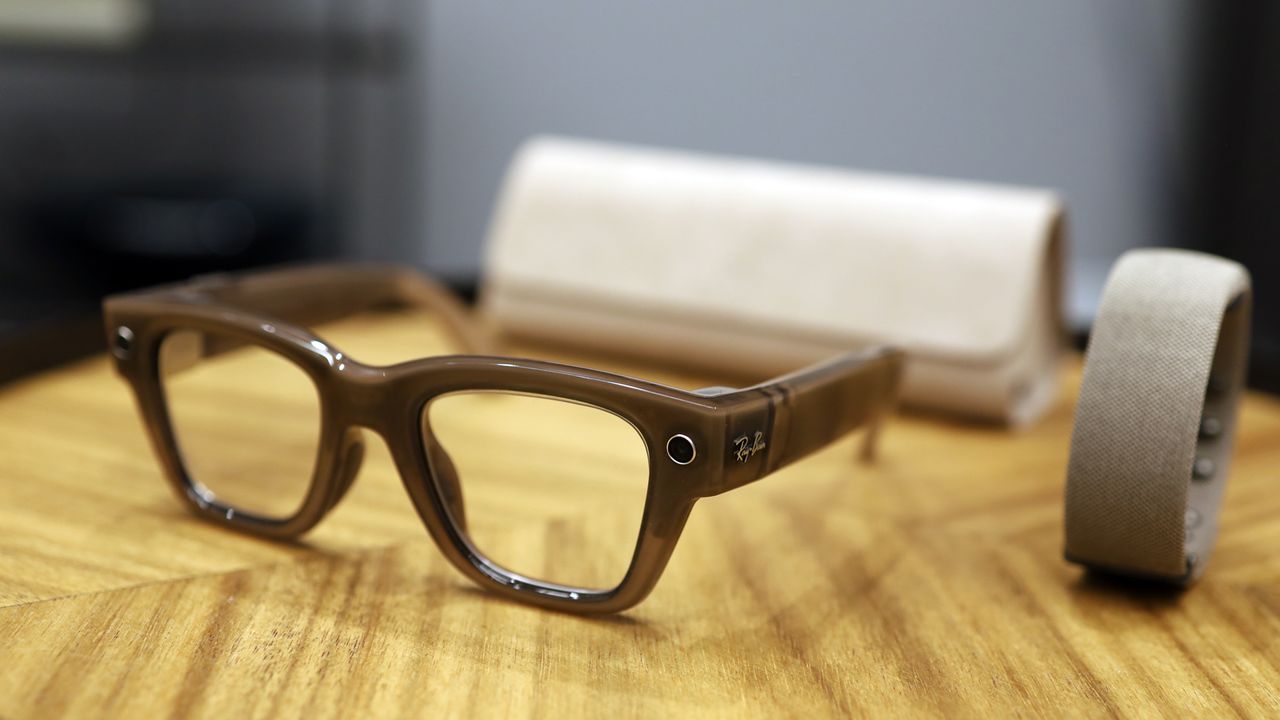 Virtual Reality & Augmented Reality, Tech Events, Computing, Software Latest from TechRadar US in Software News Read More